Ireland's trout fishing is among the best in Europe. Wild brown trout in mountain streams, sea trout in the estuaries of the west coast, stocked rainbows on commercial fisheries, and the legendary wild lough fishing of Corrib, Mask, and Conn — the variety is extraordinary. The rod you need depends entirely on which of these you're fishing, and getting that decision right is the foundation of everything else.
Dan O'Neill, a River Nore guide and one of Ireland's most respected fly fishing instructors, describes the challenge well: "As you progress on your journey, you can fine tune your rod weight and length to something that is more specialised to your chosen discipline, but for now let's focus on finding our preferred discipline without having to own 5 or 6 different fly rods." That's the right starting point — one rod that covers the most ground, then specialise from there.
The Two Approaches to Trout Fishing: Spinning vs Fly
Trout fishing in Ireland divides broadly into two methods: spinning with lures, and fly fishing. Both are legal on most waters, both are effective, and both require different rods. The choice between them is partly practical (fly fishing requires more technique to learn) and partly about the experience you want — fly fishing is slower, more contemplative, and more closely tied to reading the water and matching the hatch. Spinning is more active, covers more water, and is easier to learn.
Many Irish trout anglers do both, using spinning gear in high, coloured water when lures are most effective, and switching to fly when the water drops and clears. Having one decent rod for each method is the most versatile approach.
Spinning Rods for Trout
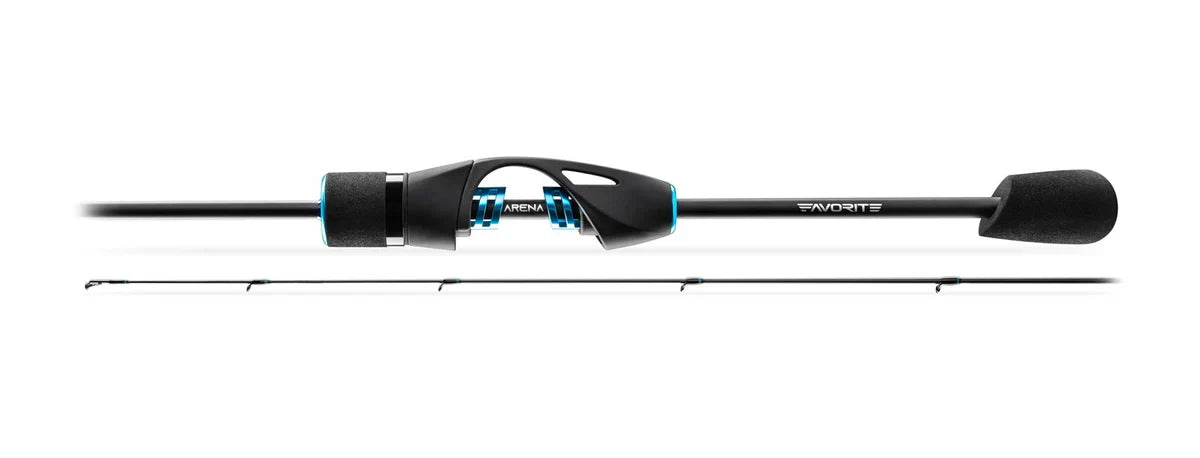
For spinning, trout fishing requires a light or ultralight rod. Trout are not large fish — even a good wild brown trout of 1–2lb on a heavy rod feels like nothing. The right rod is one that loads with lures in the 2–15g range, transmits the action of small spinners and spoons through the tip, and makes the fight of a trout feel like the event it is.
A 6'6"–7'6" rod rated UL or L (ultralight or light, 1–10g or 3–15g) is the standard for trout spinning on Irish rivers and loughs. The shorter end of this range (6'6"–7ft) is better for small, overgrown rivers where accuracy matters and a long rod would catch branches on every backcast. The longer end (7'–7'6") gives you more reach on open loughs and larger rivers where distance casting is an advantage.

Select Glam Spinning Rod
For trout spinning with suitable lures, compare the 244cm 5–23g version. Match the actual lure weight to that rating; this is not a substitute for an ultralight rod intended for very small spoons.
Lures for Trout Spinning
Trout respond to a narrower range of lures than pike or perch. The most effective trout spinning lures in Ireland are:
- Small spinners (3–7g): The classic trout lure. A silver or gold blade spinner worked slowly through a pool or riffle is one of the most reliable trout presentations there is. The blade creates vibration that trout detect from a distance, and the flash imitates a small fish.
- Small spoons (5–10g): Particularly effective in loughs and larger rivers where you need to cover more water. A wobbling spoon retrieved slowly through a pool produces takes from trout that are holding in the deeper sections.
- Trout-specific soft baits: PowerBait Mice Tails and similar floating soft baits are devastatingly effective on stocked fisheries and work well on wild fish too. They can be fished on a simple running ledger or under a float.

Berkley PowerBait Floating Mice Tails Glow
The Glow colour of Berkley PowerBait Floating Mice Tails offers a floating-bait option for the trout-bait approach discussed here. Check your fishery’s permitted baits before choosing this method.

Kinetic Pixie Inline 7g Orange/Yellow/Silver
A 7g inline lure in Orange/Yellow/Silver. Its compact profile suits the lighter lure approach discussed here. Choose line and a rod rated for this weight, and vary the retrieve to suit depth and conditions.
Fly Rods for Trout: The Irish Standard
Dan O'Neill's recommendation for a first fly rod is clear and consistent with what most experienced Irish fly anglers would tell you: "My main choice of rod for a day's guiding / fishing would be a 9ft 5wt rod — so nine feet long and suited to a five-weight fly line. The 9ft 5wt is what some call the 'vanilla' of fly rods. This will cover most applications that you will come across when starting out on a river."
The 9ft #5 weight is the most versatile single fly rod you can own for Irish trout fishing. It handles wet flies, dry flies, nymphs, and light streamers with equal competence. It casts comfortably in the wind that's almost always present on Irish loughs. It's light enough to fish all day without fatigue, and powerful enough to handle a sea trout or a good-sized wild brown.
Understanding Fly Rod Action
Dan O'Neill's explanation of fly rod action is the clearest I've read: slow action rods bend from tip to handle and are best for small streams and delicate presentations; medium action rods bend from the tip to about halfway down and offer a good combination of power and forgiveness; fast action rods flex close to the tip and generate high line speeds for distance casting.
For a beginner, a medium or medium-fast action is the right choice. The wider timing window makes it easier to develop a consistent casting stroke. As you improve, you can move to a faster action if you need more distance — but many experienced Irish fly anglers fish medium-action rods their entire lives and never feel the need to change.

Shakespeare Cedar Canyon Premier Fly Rod
The 9ft 5/6wt version is an option for a trout fly-fishing setup. Match the fly line to the selected rod’s rating and choose the length for the water you fish.

Shakespeare Sigma Supra Fly Rod
Compare the 9ft 5wt version for trout fly fishing. Other lengths and line ratings in the range are separate configurations; check the selected option before choosing a matching line.
Fly Lines and Leaders: The System That Makes the Rod Work
A fly rod without the right line is useless — the line is what carries the cast. For most Irish trout fishing, a weight-forward floating line matched to the rod weight is the starting point. Darius Simkus, who has represented Ireland in competition fly fishing, recommends a leader of 0.20–0.22mm mono around 5 metres long for nymphing, with a tippet of 4x–8x depending on the size of fish you're targeting.
For dry fly and wet fly fishing, a tapered leader of 9–12ft is standard. The taper transfers energy smoothly from the fly line to the fly, allowing a delicate presentation that a level leader can't achieve. In clear, low summer water, a longer, finer leader (12ft, 6x tippet) is often necessary to avoid spooking fish that can see the line clearly.

Greys Platinum Float/Intermediate Fly Line
€35.99
A dual-purpose fly line covering both floating and intermediate presentations — ideal for Irish trout fishing across different seasons. The smooth, low-memory coating casts well in cold conditions and the weight-forward taper loads medium-action rods efficiently for accurate presentation.
Flies: What to Carry for Irish Trout
Dan O'Neill's advice on flies is refreshingly practical: "I have yet to discover a river that a Pheasant Tail nymph does not work in. It's a very simple pattern but so effective. The Hare's Ear is also a superb pattern." His tip for choosing flies: watch what's hatching, take a photo, and match it. Keep a diary of what works and when — after a season, you'll have more useful information than any general guide can provide.
For a starting fly box covering Irish trout fishing, you need:
- Nymphs: Pheasant Tail (sizes 14–18), Hare's Ear (sizes 14–18), tungsten bead versions for faster water
- Wet flies: Greenwell's Glory, Bibio, Claret Bumble — the classic Irish lough patterns
- Dry flies: Adams, Elk Hair Caddis, Blue Winged Olive — for summer evening rises
- Streamers: Small Woolly Bugger or Muddler Minnow for sea trout and larger brown trout
Compare fly lines for your trout setup
Choose a fly line matched to your rod rating and the presentation you intend to use. A suitable line is part of the complete trout fly-fishing setup; compare the specifications of the available options.
Rod Selection by Trout Fishing Type
| Fishing Type | Rod | Key Spec | Best For |
|---|---|---|---|
| Small river spinning | Spinning Rod 6'6"–7ft | UL/L, 1–10g | Spinners, spoons, small lures on tight rivers |
| Lough spinning | Spinning Rod 7–8ft | L/ML, 5–20g | Spoons, plugs, covering water on open loughs |
| River fly fishing (beginner) | Fly Rod 9ft | #5 weight, medium action | Wet fly, dry fly, nymph on rivers like the Nore |
| Lough fly fishing | Fly Rod 10ft | #6–#7 weight | Drifting from a boat, pulling wet flies in wind |
| Nymphing (competition style) | Fly Rod 10–11ft | #2–#3 weight | Euro nymphing on rivers, following Darius Simkus's approach |
| Sea trout | Fly Rod 9–10ft or Spinning Rod 8–9ft | #7–#8 weight or M/MH | Estuaries and tidal rivers at dusk |
Browse our full range of trout fishing gear at Emerald Ripple: fly rods, spinning rods, fly line, fly reels, dry flies, wet flies, nymphs, trout bait, and spinners.