
Bait Punches & Crusher
1 product
Showing 1 - 1 of 1 product
Explore bait punches and crushers for preparing bread, meat, paste, pellets, boilies and other suitable fishing baits in Ireland. Compare punch diameter, cutting edge, ejection method, crusher chamber, teeth, capacity, handle grip and cleaning access around the required shape and texture. Choose a dedicated tool for each job, prepare measured amounts and keep every food-contact surface clean.
Recently viewed
Bait punches and crushers for repeatable preparation
Bait punches and crushers perform different preparation jobs. A punch cuts a defined disc or cylinder from suitable soft bait, while a crusher breaks firm pellets or boilies into crumb and irregular particles. Keeping the functions separate helps produce a more consistent hookbait or feed texture.
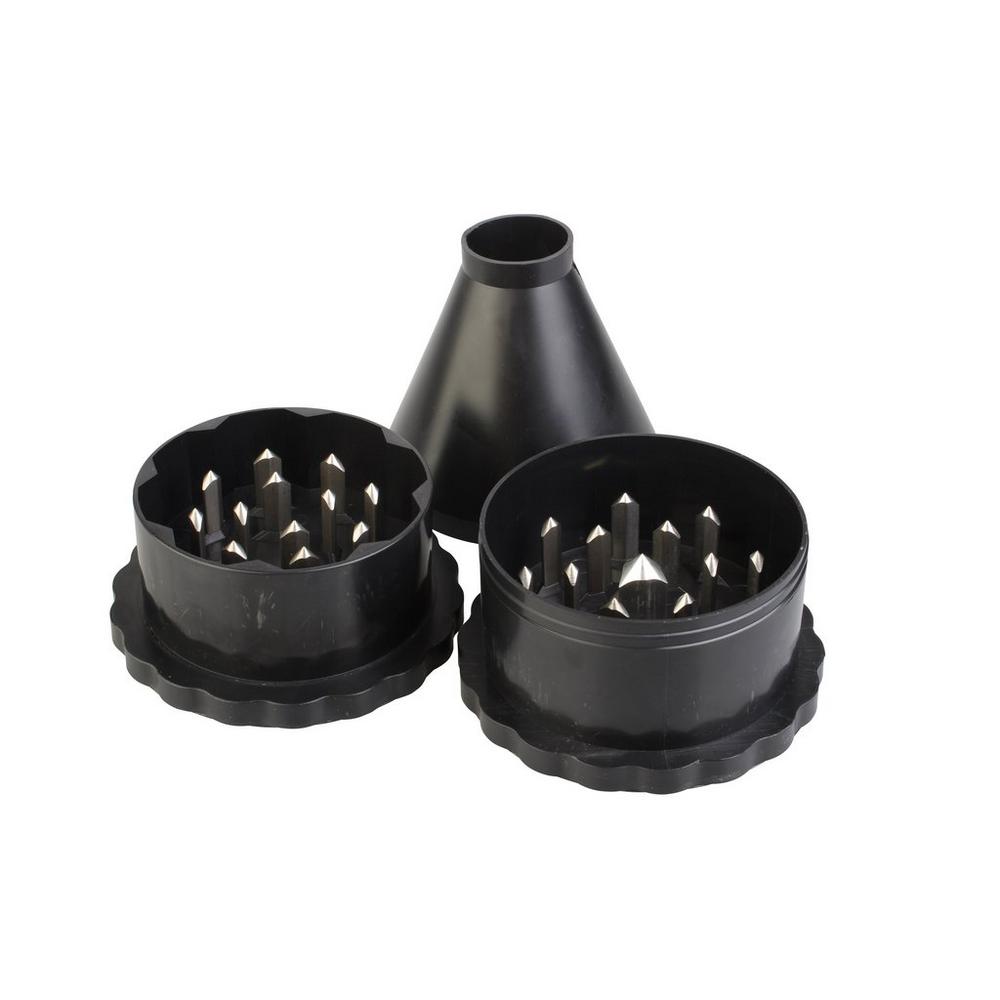
Punch diameter controls bait size and should match the hook, target species and presentation. Crusher teeth, chamber capacity and applied pressure affect particle size. A clear or opening chamber makes it easier to monitor the mix and remove residue before it hardens.
Browse the parent fishing tools range, compare bait drills, prepare expanders with a pellet pump, or transfer a drilled hookbait using a bait needle.
Choose bait size, texture and tool capacity
For punches, select a sharp, smooth edge that cuts without tearing. Press straight down on a clean stable board and use the ejection system rather than pushing fingers near the edge. Very dry or fibrous bait may not release as a neat cylinder and should not be forced.
For crushers, add only the recommended quantity and close the chamber fully. Apply pressure gradually, inspect the result and repeat if a finer crumb is needed. Hard foreign objects can damage the teeth, while overfilling can jam threads or hinges.
Prepare only enough bait for the session and follow fishery rules on bait type and quantity. Keep crushed feed dry until the recipe requires liquid. Separate tools used with meat or oily bait from clean rig materials, and wash hands before handling line or PVA.
Clean food-contact surfaces thoroughly
Disassemble the tool only as the instructions permit. Remove crumbs from punch tubes, edges, crusher teeth, threads and seals, then wash or rinse with a suitable method. Dry every cavity before reassembly so moisture and residue are not trapped in storage.
Cover sharp punches and store crushers without excessive load on their mechanism. Replace chipped edges, cracked bodies, damaged teeth or loose handles. Do not use a bait-preparation tool for human food, and take unused bait and residue home for responsible disposal. Clean equipment between waters where local biosecurity guidance requires it.