
Umbrellas
1 product
Showing 1 - 1 of 1 product
Explore fishing umbrellas and brollies for rain, sun and bankside shelter during Irish angling sessions. Compare canopy diameter, coverage, frame, centre pole, tilt, side panels, guy points, material, waterproofing, packed length, weight and ground compatibility. Choose enough room for the swim, secure every support, keep clear of overhead hazards and lower or pack the shelter before wind exceeds safe use.
Recently viewed
Fishing umbrellas for bankside weather cover
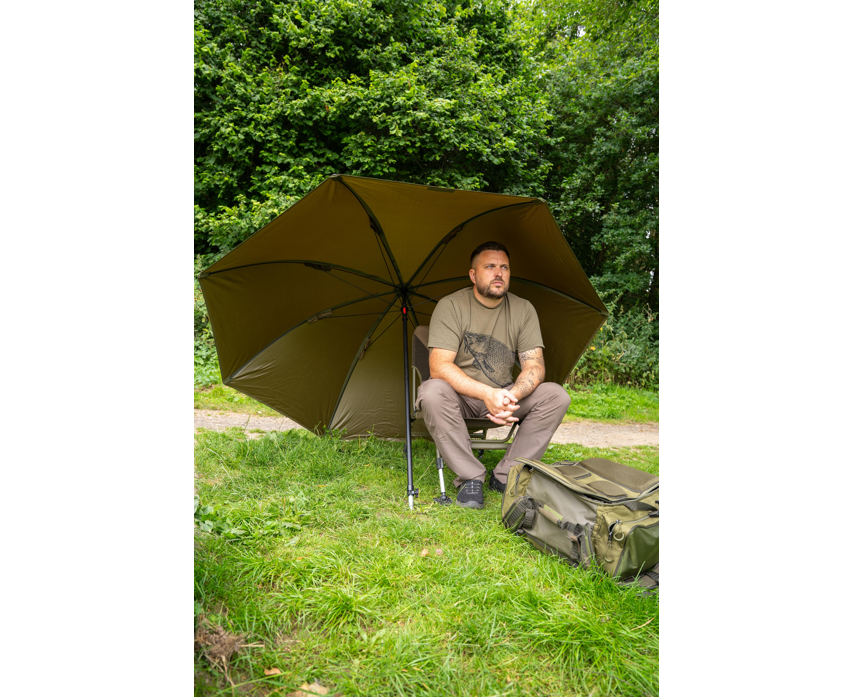
A fishing umbrella provides quick cover from rain or sun while leaving the swim open and accessible. Standard centre-pole designs, tilting umbrellas and brolly-style shelters offer different coverage. The best format depends on the number of people, seating, wind exposure and space allowed by the venue.
Canopy diameter does not equal the dry floor area because wind-driven rain enters from the side. Side panels and storm wings add protection but also increase wind load and setup space. Check waterproof fabric, seams and attachment points rather than assuming every canopy is suitable for prolonged rain.
Browse all bank-fishing equipment, position compatible fishing seating beneath the shelter, compare enclosed fishing tents, and add appropriate fishing clothing for conditions outside the covered area.
Choose size, frame and anchoring
Measure the available swim and packed transport length. A large canopy offers coverage but is heavier, harder to position and more exposed to gusts. Check pole diameter, tilt lock, frame material and whether guy ropes, pegs or stabilisers are included or compatible.
Use anchors suited to the ground and venue rules. Keep pegs and ropes visible and away from paths, rods and landing areas. Never erect the umbrella under power lines, unstable trees or where a rising water level can isolate it.
Umbrellas are not designed for every wind speed. Monitor conditions, lower the canopy early and never rely on extra weight or improvised anchors to make an unsafe setup acceptable.
Set the opening direction so rain runs away from seating, tackle and the route to the rods. Leave enough clearance to lower the canopy without striking equipment. If side panels are fitted, confirm that they do not block visibility of rod tips or a safe, direct exit from the swim.
Dry and inspect fishing umbrellas
Shake off water, remove mud and open the canopy to dry fully before storage. Do not use cooking stoves, heaters or open flames beneath or beside the fabric.
Inspect ribs, hubs, pole locks, seams and guy points. Repair only as the manufacturer permits, cover sharp ends for transport and replace a frame that has bent or no longer locks securely.