Starting out in fishing is one of those things that looks simple from the outside and gets complicated the moment you walk into a tackle shop. There are rods in every length, weight, and price range, and nobody behind the counter has time to explain why a 3lb test curve matters or what "fast action" actually means in practice. Most beginners end up buying something that's either too much rod for where they're fishing or too little rod for what they want to catch.
This guide is written for people who are just getting started — whether you've never held a rod before or you've been borrowing one and you're ready to own something of your own. We'll cover what actually matters when choosing a first rod, which types suit Irish fishing conditions best, and how to avoid the mistakes that most beginners make in the first season.
The Most Important Thing Nobody Tells You
Before you think about brands, prices, or specifications, you need to answer one question: where are you going to fish?
Ireland has an extraordinary variety of fishing — canals, rivers, loughs, reservoirs, sea marks, and commercial fisheries. The rod that works brilliantly on the Grand Canal in Dublin is not the same rod you'd want for spinning for bass off the rocks in Wicklow. Getting this decision right first saves you from buying the wrong gear and spending your first season fighting your own equipment.
If you're fishing canals, slow rivers, or small stillwaters near Dublin or Drogheda — which is where most beginners start — a feeder rod or a basic float setup is the right starting point. If you want to explore lure fishing for perch and pike on larger loughs, a spinning rod is more versatile. If you want something you can throw in a bag and take anywhere without thinking about it, a telescopic spinning rod is hard to beat for convenience.
The Three Rod Types That Cover Most Beginner Fishing in Ireland
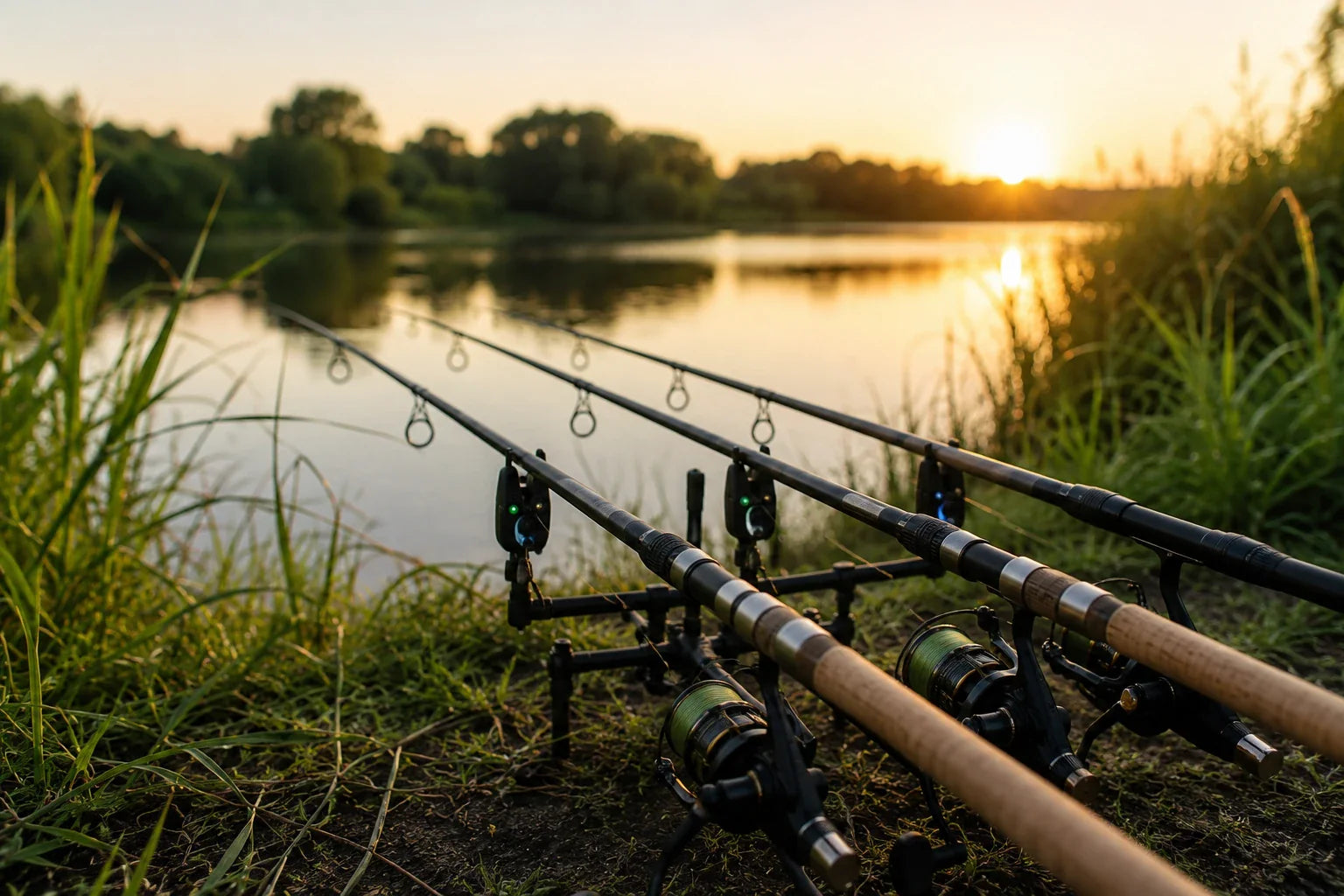
Feeder rods are the workhorses of Irish coarse fishing. A feeder rod has a sensitive, interchangeable tip — called a quiver tip — that bends when a fish takes the bait, giving you a clear visual bite indication. You fish with a small cage or method feeder that carries groundbait or loose feed to the bottom, with your hookbait right next to it. This method is devastatingly effective on canals and slow rivers for roach, bream, perch, and hybrids — the species you're most likely to encounter on your first sessions near Dublin or Drogheda. A 10–11ft feeder rod rated to around 40–60g is the right spec for most Irish coarse venues.
Spinning rods are the most versatile option if you want to cover more ground. A spinning rod lets you cast lures — spinners, soft plastics, small crankbaits — across a wide area and work them back through the water. This is an active, mobile style of fishing that suits anglers who don't want to sit in one spot. For beginners, a 7ft spinning rod in the medium-light to medium range (rated roughly 5–25g) paired with a spinning reel is a genuinely capable setup for perch, pike, and trout on most Irish waters. It's also the most transferable skill — the casting and retrieve technique you learn on a small river translates directly to sea fishing and larger loughs as your confidence grows.
Telescopic rods solve a specific problem: transport. A full-length rod is awkward to carry on public transport, store in a small flat, or pack into a car that's already full. A telescopic spinning rod collapses down to 50–60cm and extends to a usable fishing length of 2–3 metres. The trade-off is that telescopic rods don't have the defined action of a multi-piece rod — the blank doesn't load and unload as efficiently, which affects casting distance and sensitivity. For casual sessions, short-range fishing, and getting started without committing to a full setup, they're perfectly adequate. For anyone who gets serious about fishing, a proper multi-piece rod will eventually replace them.
What to Pair With Your Rod
A rod without a reel is just a stick. For most beginner setups, a fixed-spool spinning reel in the 2500–3000 size range is the right match for a feeder or spinning rod. It's easy to use, handles monofilament line well, and gives you enough line capacity for the distances you'll be fishing at the start.
Line choice matters more than most beginners realise. For feeder and float fishing, monofilament in the 4–6lb range is the standard — it has enough stretch to absorb the shock of a fish taking on a tight line, and it's forgiving of the small knot-tying errors that everyone makes when they're learning. For spinning, monofilament works fine, but many anglers switch to braided line once they're comfortable — braid has no stretch, which means you feel every take and every bump of the lure on the bottom, making you a more aware and more effective angler.
For your first float fishing setup, a selection of wagglers and a few coarse hooks in sizes 14–18 are all you need to get started. Add a small tackle box to keep everything organised and a few packets of split shot for weighting the float, and you have a complete beginner setup for under €50.
Where to Fish Near Dublin and Drogheda
The Royal Canal and Grand Canal both run through Dublin and offer accessible, well-stocked coarse fishing for roach, bream, perch, and tench. You don't need a boat, you don't need specialist gear, and you don't need to travel far. A feeder rod or a simple float setup with coarse bait — maggots, worms, or sweetcorn — is all you need for a productive session on either canal.
The River Boyne near Drogheda is one of Ireland's most famous fishing rivers, offering salmon and trout fishing as well as excellent coarse fishing in the lower reaches. For beginners, the coarse sections are the most accessible — roach and bream are plentiful and not particularly shy.
For sea fishing, the Dublin coastline and the beaches north toward Drogheda offer good shore fishing for bass, flatfish, and coalfish. A surf rod and a basic running ledger rig with monofilament line is the starting point for shore sea fishing — it's a different discipline from coarse fishing but equally accessible for beginners.
Fast Delivery Across Ireland
All orders placed before 2 PM are dispatched the same day, with fast delivery across Ireland including Dublin, Drogheda, and surrounding areas. If you find the same item cheaper at another Irish tackle retailer, send us the link and we'll beat their price — no questions asked.
Browse our full range of beginner fishing rods at Emerald Ripple, including feeder rods, spinning rods, telescopic spinning rods, and rod combos that include everything you need to get on the water straight away.