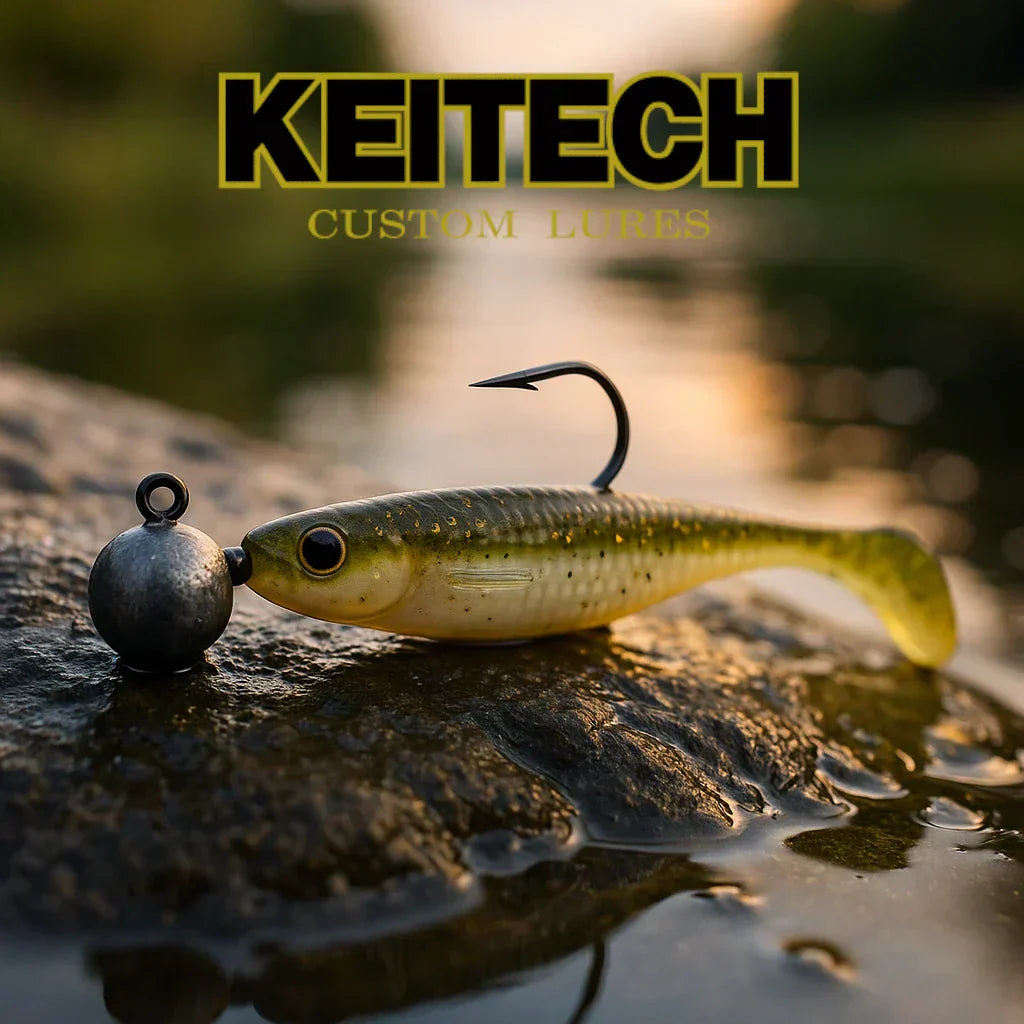
I've been fishing for perch on the Grand Canal since before Keitech existed as a brand. Back then it was Mepps minnows and Ondex spinners, and they worked — but when I first saw what a well-presented soft plastic could do on a 3g jig head in clear canal water, I understood immediately why the Polish anglers who introduced me to the method were catching three fish for every one of mine.
That was a long time ago. Since then I've spent more sessions than I can count working the ledges between Clondalkin and Robertstown, the lock pools on the Royal Canal, and the windward banks of midland loughs. Keitech lures — particularly the Easy Shiner and Swing Impact families — have been in my box for most of that time, and I've learned exactly when they work, when they don't, and what makes the difference between a follow and a take.
Why Keitech Works on Irish Perch
Perch in Ireland's canals and lakes are not naive fish. The Grand Canal and Royal Canal in particular are heavily fished, and the perch in the more accessible stretches have seen every lure on the market. What Keitech offers — and what cheaper soft plastics often don't — is action at very low speed. The tail starts moving on the drop, it keeps moving on a slow roll that would kill the action on a stiffer plastic, and it tracks straight without spinning or rolling off-axis. In clear water, where perch can inspect a lure for several seconds before committing, that natural action at ultra-slow retrieve speeds is the difference.
Marcin Kantor, one of the most respected lure fishing specialists in Ireland and a regular contributor to Fishing in Ireland, puts it plainly: "Always fish as light a weight as possible in the given situation, to be able to stay in contact with the bottom. The lighter weight will have significantly more impact on the bites than say different lure colour or thinner line." That principle — minimum weight for maximum contact — is the foundation of good Keitech fishing for perch.
Size: Why 2–3" Is the Starting Point
The instinct when you're not catching is to go bigger. Resist it. On Irish canals and most stillwaters, perch are keyed in on small baitfish — fry, small roach, tiny rudd — and a 2–3" profile matches that prey size accurately. More importantly, a smaller lure on a lighter head has a slower sink rate, which keeps it in the strike zone longer and allows the tail to work on the drop in a way that a heavier, larger lure simply can't replicate.
Alan Walsh, a Dublin-based perch specialist who has been fishing the Grand Canal for decades, uses 2–3" as his default range across all conditions, only stepping up in size when searching new water or fishing in strong colour and wind. His observation — that perch in the canals "don't follow the rules" about structure in winter, and can be found at bends, turning bays, and large decaying weed bays rather than the obvious bridges and locks — is something I've confirmed repeatedly on my own sessions.
The Four Keitech Lures That Cover Irish Perch Fishing
Easy Shiner 3" is the clear-water default. It has a thin, subtle paddle tail that produces a gentle, high-frequency vibration rather than the heavy thump of a fatter shad. In gin-clear canal water on a bright day, that subtlety is critical — a lure with too much action spooks fish that have had time to inspect it. On a 3g jig head with a slow roll that keeps the tail just ticking, this is the most consistent single lure I've used on the Grand Canal. Colours: ayu and smelt are the starting points; add a faint pearl for dawn and dusk sessions.
Swing Impact 2" is the finesse option when fish are short-biting or the Easy Shiner isn't converting follows. The smaller body produces a tighter, higher-frequency vibration — more nervous energy, less displacement. When perch are nipping at the tail of a 3" lure without getting hooked, dropping to the 2" Swing Impact and extending the pauses between turns almost always produces proper takes. Marcin Kantor reaches for the Keitech Mad Wag Mini 2.5" in similar situations — the principle is identical: smaller profile, longer pause, let the fish commit.
Swing Impact Fat 2.8–3.3" is the search lure for coloured water and windy conditions. The fatter body displaces more water, creating a thump that fish can locate in low visibility. When a south-westerly is pushing waves onto a lake bank and the water has colour in it, a Swing Impact Fat in motor oil or green pumpkin on a 4–5g head with a lift-and-drop retrieve will find fish that the subtle Easy Shiner can't reach. Many of the best takes come on the fall — the lure drops back after the lift and a perch that's been following takes it on the way down.
Sexy Impact 3" is the cold-water and high-pressure specialist. Its ribbed, worm-like profile is designed for Ned rigs, wacky presentations, and dropshot — methods where the lure barely moves and the action comes from the material itself rather than the retrieve. In January and February, when perch are shoaled up tight and reluctant to chase anything, a Sexy Impact on a light dropshot with 2–3mm twitches and long dead pauses is the presentation that keeps you catching when everything else has gone quiet.
Rigs: Jig Head, Dropshot, and Cheb
Jig head fishing is the most versatile approach and covers the majority of Irish perch situations. The weight selection is critical — as Marcin Kantor emphasises, lighter is almost always better. On calm canal water with a depth of 1.5–2m, a 3g jig head is the starting point. Step up to 4–5g when wind creates drift or you're fishing a deeper lake mark. The right weight is the lightest one that keeps you in contact with the bottom — if the lure is ploughing the shelf rather than ticking it, you're too heavy.
Retrieve options on the jig:
•Slow roll — rod tip slightly down, just enough reel speed to make the tail tick. The go-to for clear water and active fish.
•Lift-and-drop — raise the rod 10–20cm, follow the lure down on a semi-slack line. Best for coloured water and breeze.
•Stop-and-go — two handle turns, then a pause long enough to count. Converts followers that won't commit on a continuous retrieve.
Dropshot is the precision tool, and it's particularly effective on the canals in winter. The ability to hold the lure in one place — above a snag, just off a lock wall, at a specific depth in a marina corner — while adding tiny movements is something no jig head setup can replicate. Alan Walsh has described sessions on the Barrow where he switched from float fishing with worm to dropshot in the same spot and went from a handful of fish to thirty in an afternoon. The shoal was there; the dropshot just kept the lure in front of them long enough for them to take it.
For canal dropshot, use a fluorocarbon leader of 30–40cm — shorter than you might expect, but in a canal with a depth of 1.5–2m, a longer leader puts the lure too high in the water column. Hook size 4–6 on a single hook, minimal rod movement, and pauses of 3–5 seconds. Most takes are feather-light — a slight resistance, a twitch of the rod tip, sometimes just a change in the way the line is hanging.
Cheb (Cheburashka) rig is Marcin Kantor's go-to for 80% of his soft lure fishing. The hinged weight frees the tail to work independently, which gives a more natural action than a fixed jig head, and the offset hook makes it relatively weedless around structure. For current seams and areas with light weed, a 2–4g cheb with a slow crawl and a pendulum-fall back to the bottom is a deadly combination.
Reading the Water: Where Perch Actually Are
Perch are structure-oriented, but the structure they use changes with the season and the conditions. The obvious spots — bridges, locks, mooring posts — are worth fishing, but they're also the most pressured. The fish that live under the main bridge in a town centre have seen every lure in the shop.
On the canals, Alan Walsh's observation about winter location is worth taking seriously: in cold months, perch move away from the obvious features and congregate at bends, turning bays, and large areas of decaying weed. He also notes that electricity wires crossing the canal seem to attract fish — possibly because the structure creates a subtle current break, or because the shade line concentrates fry. Look for Dabchicks (little grebes) working a stretch of canal — they're feeding on the same small fry that perch are hunting, and where you see them diving repeatedly, there are almost certainly perch below.
On lakes, the productive areas are windward weed edges — the breeze pushes fry and small fish onto the bank, and perch follow. Rock-to-weed transitions and gravel bars concentrate fish throughout the season. Inflows and outflows create micro-currents that funnel food, and a lift-and-drop along the seam of an inflow is one of the most reliable perch presentations on any Irish stillwater.
In marinas and boat yards, the outer corners and the drop-off into the main channel are the key areas. Boat traffic stirs the edges and pushes fish mid-water — after a busy period on the canal, the fish are often suspended rather than bottom-hugging, and a dropshot with a short leader presented just above the snags will find them.
Tackle: Keeping It Light and Sensitive
The rod matters more for perch lure fishing than most anglers realise. Marcin Kantor recommends a 7'0–7'6" rod with a casting weight of 1–7g and an extra-fast or fast action for canal and river fishing. The extra-fast tip transmits takes that a softer rod would absorb — perch bites on a 2g jig head in 2m of water are often very subtle, and a rod that can't communicate them means missed fish you didn't even know were there.
A spinning reel in the 1000–2000 size keeps the setup light and balanced. A heavy reel on a light rod kills the feel. Load it with braided line in the PE 0.4–0.6 range (approximately 6–10lb) — braid's lack of stretch is essential for feeling takes at distance and through light jig heads. Add a fluorocarbon leader of 0.16–0.20mm (5–7lb) for abrasion resistance and near-invisibility in clear water.
For the spinning rod choice, look for something in the spinning rods range rated to 7g or below — a rod rated 5–25g is too heavy for the 2–3g heads you'll be using most of the time and will mask the subtle takes that make the difference between a good session and a blank.
Seasonal Adjustments
Spring — water is still cold, fish are tight to shelves and marinas. Easy Shiner 3" in ayu or smelt on a 3g head with a slow roll. On sunny, gin-clear days, translucent colours outperform anything with flash or heavy flake.
Early to mid-summer — weed growth and fry clouds mean fish are on the edges. Keep 3g for canals; step to 4g where breeze adds drift. A light lift-and-drop turns followers into eaters. This is the time when the Swing Impact Fat starts earning its place in the box.
Late summer to autumn — wind and colour increase. Swing Impact Fat in motor oil or green pumpkin on 4–5g, fan-cast windward banks and rock-to-weed transitions. The best takes often come on the fall.
Winter — slow down, downsize to 2", extend pauses. Matte naturals with a micro-cheb of 2–3g convert wary fish. Dropshot with the Sexy Impact 3" on long dead-pauses is the method that saves blank sessions when nothing else is working.
The Mistakes That Cost Bites
Overweighting the jig head is the most common error. If the lure is dragging the shelf rather than ticking it, drop to 3g and regain the tail action. Contact without drag is the correct weight.
Fishing too fast in cold or clear water is the second. Switch to the Easy Shiner 3", add micro-pauses, and keep rod angles low.
Colour panic — cycling through ten colours when the bites dry up — is a waste of time. Change angle, speed, and pause length first. Then, if nothing changes, swap from natural to a single contrast tone.
Dropshot leader too long. In canals, trim to 30–40cm so the bait sits where perch actually hold.
Where to Find the Gear
Everything you need for perch lure fishing on Irish canals and lakes is available at Emerald Ripple. Browse our full range of soft lures including the complete Keitech range, jig heads in the 1–5g range for canal and lake fishing, spinning rods suited to ultralight presentations, spinning reels in the 1000–2000 class, braided line and fluorocarbon leaders, and single hooks for dropshot and cheb rigs. If you're also fishing waters that hold pike alongside the perch, our pike fishing guide covers the seasonal patterns and tackle adjustments for targeting both species on the same session.