
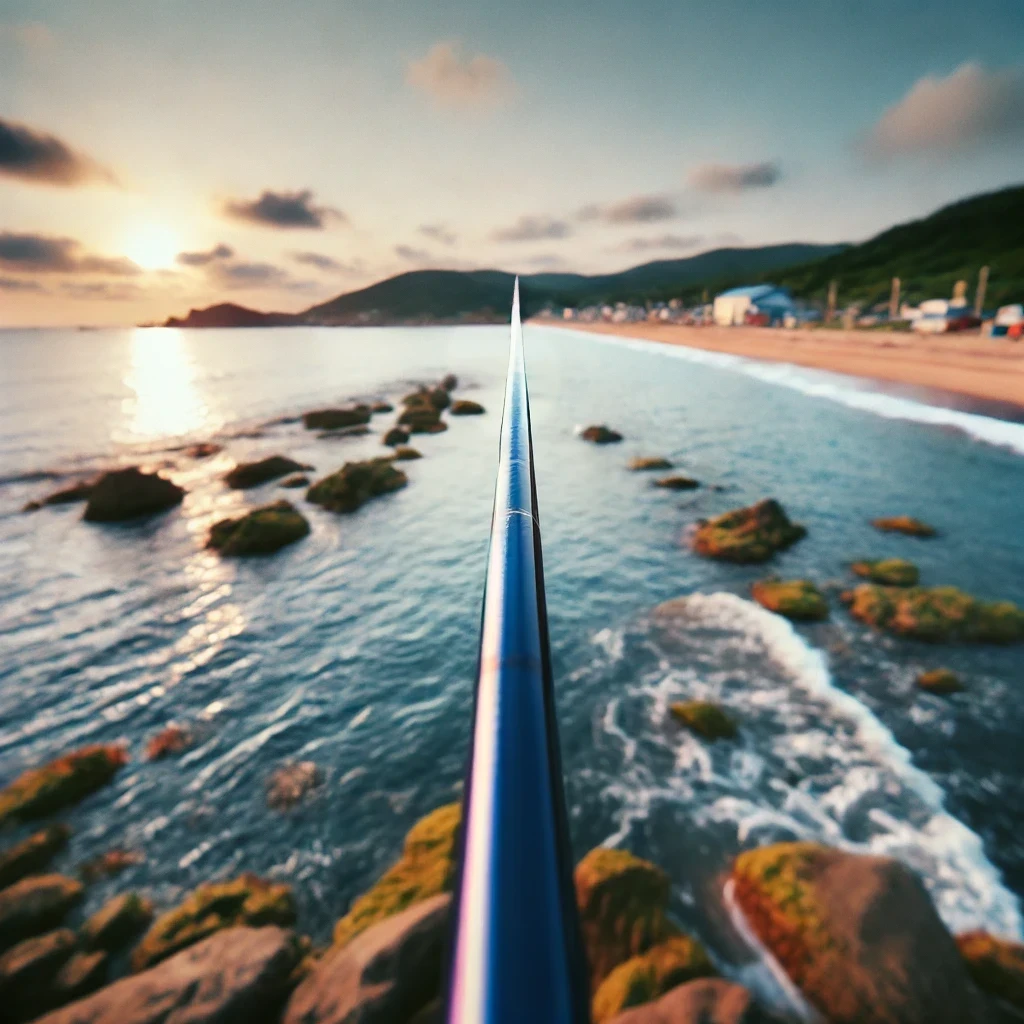
The first time I fished for pollock properly — not just chucking a spinner out and hoping — I was standing on a wet ledge on the west coast with a stiff onshore breeze and absolutely no idea what I was doing wrong. I'd had a few follows, one half-hearted tap, and nothing in the bag. The guy fishing twenty metres to my left was pulling fish out every few casts. Same lure, same spot, same conditions. The difference was entirely in how he was working the bait.
That session taught me more about pollock than anything I'd read before it.
Where Pollock Actually Live
Pollock are ambush predators. They sit tight to structure — rocks, kelp beds, reef edges, underwater boulders — and wait for something to swim past at the right height above them. They're not chasing bait across open water in most conditions; they're watching from below and striking upward when something looks vulnerable.
That tells you everything you need to know about how to fish for them. Your lure needs to be working close to the bottom, in and around that structure, moving in a way that looks like a small fish that's lost its bearings. Get that right and pollock will find you. Get it wrong and you'll spend the session watching the water.
The Retrieve That Works: Step by Step
This is the sequence I've settled on after a lot of trial and error, and it's the one that consistently produces fish:
1.Cast to your target area — ideally across the current so the lure swings through the zone naturally.
2.Take up the slack as soon as the lure hits the water. A loose line means you're not in control.
3.Let it sink for 3–4 seconds. You want it near the bottom before you do anything else.
4.Two turns of the reel — just enough to lift the lure off the bottom.
5.Pause 2–3 seconds. Let it drop back down.
6.Pull the rod toward the shore — a smooth, horizontal sweep that makes the lure dart forward like a fleeing fish.
7.Two more reel turns to lift it again.
8.Another 2–3 second pause.
9.Another rod pull for the horizontal movement.
10.Final pause of 2–3 seconds, then repeat from step 4.
The pause is everything. I can't stress this enough. The vast majority of takes happen during the pause — not on the retrieve, not on the rod pull, but in that moment when the lure is sinking back down and looking completely defenceless. If you're rushing through the pauses to keep the lure moving, you're fishing it wrong.
Adjust the pause length based on depth and current. In deeper water or slack tide, I'll extend the pauses to 4–5 seconds. In a strong run of tide, shorter pauses keep the lure in the zone without drifting too far off course.
Why You Must Stay Close to the Bottom
Pollock don't chase surface lures in normal conditions. They're looking up from their lie in the rocks, and they'll commit to a lure that's working at the right depth — typically within a metre or two of the bottom. Go too high and you're fishing over their heads. Go too fast and you're pulling the lure out of the strike zone before they've had time to decide.
The exception is when pollock are actively hunting baitfish near the surface — you'll sometimes see this happening when seabirds are diving and working a patch of water. In those moments, faster retrieves and surface or mid-water presentations can work well. But that's the exception, not the rule. Build your approach around bottom-hugging structure fishing and you'll catch fish far more consistently.
Line and Leader Setup
For rock fishing, I use braided line as my mainline — minimum 35lb breaking strain. Braid gives you the sensitivity to feel the lure working and the strength to pull a fish away from the rocks before it has a chance to wrap you around something. It also casts well, which matters when you're trying to reach a specific piece of ground from a fixed position on the shore.
The essential addition is a fluorocarbon leader of at least 0.60mm diameter, 30–50cm long. This does two things: it protects the braid from the abrasion of sharp rocks near the bottom, and it resists the tangling around treble hooks that thinner materials are prone to during the pause phase. I've lost good fish because a cheap leader frayed on a rock edge mid-fight — it's not worth skimping on.
Browse our full range of lines — including braid, fluorocarbon, and monofilament — to find the right setup for your fishing.
Lure Choice
For this style of fishing, soft lures on a jig head are my first choice — they sink naturally, have a great action on the pause, and are easy to swap out when you want to change colour or profile. Minnows and crankbaits also work well, particularly in clearer water where a more realistic profile makes a difference. Vibe lures are worth having in the box for days when the fish are a bit deeper and you need something that gets down quickly and kicks hard on the retrieve.
Colour-wise, I tend to start with natural baitfish patterns — silver, white, or pearl — and switch to something brighter (chartreuse, orange) if the water is coloured or the light is low. Pollock aren't particularly fussy about colour compared to some species, but it's worth having options.
Timing and Conditions
Pollock fishing from the rocks is very much tied to the tide. The two windows I target are:
•2–3 hours before peak tide — fish activity picks up as the water rises and pushes bait onto the rocks
•Peak tide and the 2 hours following — pollock move out to hunt as the tide turns and current increases
Weather matters too. Overcast skies and a light onshore wind are ideal — pollock seem more confident in lower light, and a bit of wave action creates the kind of natural disturbance that gets them moving. I've had some of my best sessions in light drizzle with a moderate swell running. Bright, flat-calm conditions in full sun are usually the hardest.
Avoid fishing in waves over 2 metres from exposed rock marks — not just because it's dangerous, but because in those conditions you lose control of the lure and the presentation falls apart.
Safety on the Rocks — Non-Negotiable
This is the part of pollock fishing that doesn't get talked about enough. Rock marks can be genuinely dangerous, and the tide comes in faster than you expect when you're focused on fishing.
The rule I follow without exception: leave the rocks at least an hour before peak tide. By the time the water is approaching its highest point, you want to be well clear of the ledge. Know the mark before you fish it, and don't fish unfamiliar ground in poor visibility or rough conditions. No fish is worth the risk.
Putting It Together
Pollock fishing rewards patience and precision more than most sea fishing. The retrieve isn't complicated, but it has to be done right — pauses held long enough, lure kept close to the bottom, line tight enough to feel what's happening. Get those things right and you'll be catching fish that most anglers walk straight past.
For everything you need — spinning rods, spinning reels, lures, lines, and terminal tackle — browse the full range at Emerald Ripple.