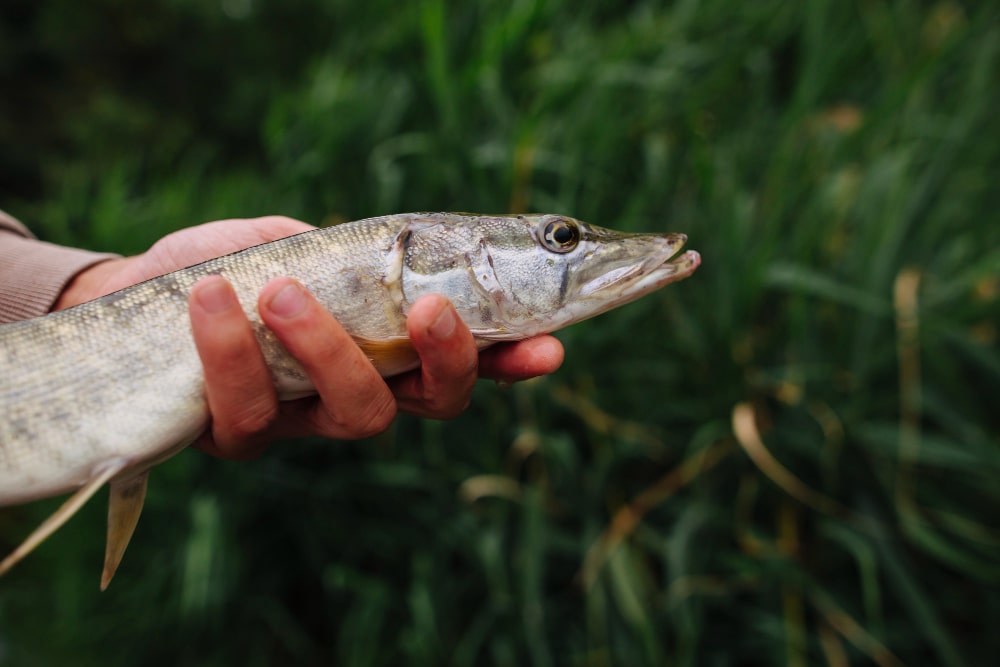
I've fished for pike in a lot of places, but nothing quite prepares you for the first time you stand on the bank of Lough Corrib in October with a lure rod in your hand. The scale of it is humbling — 176 square kilometres of water, islands everywhere, weed beds stretching into the distance, and somewhere out there, pike that have never seen a lure in their lives. Ireland's pike fishing is genuinely world-class, and the anglers who come here from across Europe and beyond know it.
This guide covers what you actually need to know to fish for pike in Ireland — not generic advice that applies anywhere, but the specific knowledge that makes a difference on Irish water.
Where to Find Pike in Ireland
Ireland's pike fisheries divide broadly into two categories: the large midland loughs (Corrib, Mask, Derg, Ree, Conn) and the river systems (Shannon, Erne, Barrow, Blackwater). Each demands a different approach.
On the big loughs, pike location is the primary challenge. The fish are spread over enormous areas, and finding them requires understanding the seasonal ecology. Thom Hunt, a pike specialist who has caught over 100 lure-caught pike per season for five consecutive years, describes the annual pattern clearly: in autumn, as temperatures cool, pike and baitfish both concentrate in deeper, more stable water. In winter, the most productive areas are steep underwater drop-offs on the northern bank — protected from cold northerly winds, south-facing, and typically one to two degrees warmer than the rest of the lake. In spring, fish move to shallow, reed-lined bays in preparation for spawning.
On rivers, pike location is more straightforward. They hold in the same types of features year-round: weed edges, submerged snags, the slack water behind bridge pillars, the deep pools at bends. The difference between seasons is activity level — in autumn they're feeding hard and will chase lures aggressively; in winter they're lethargic and require slower, more precise presentations.
Seasonal Guide: When to Fish and What to Expect
| Season | Water Temp | Pike Behaviour | Best Approach |
|---|---|---|---|
| Spring (Mar–May) | 6–13°C | Pre-spawn then post-spawn funk, then explosive feed-up in late May | Avoid March–April. Late May post-spawn feed can be exceptional — aggressive lure fishing |
| Summer (Jun–Aug) | 15°C+ | Spread out, less active in heat, but catchable early morning | Dawn sessions, surface lures, weed edges. Slower retrieves in warm water |
| Autumn (Sep–Nov) | 8–14°C | Feeding hard to build condition. Best time for numbers and size | Aggressive lure fishing, large soft plastics, jerkbaits. Most productive season |
| Winter (Dec–Feb) | 3–8°C | Short feeding windows at first and last light. Passive between feeds | Northern bank drop-offs. Slow presentations, deadbait, suspending jerkbaits |
Lure Fishing: The Most Active and Rewarding Method
Lure fishing for Irish pike is at its best in autumn, when fish are feeding aggressively and willing to chase. The standard setup is a 9–10ft spinning rod or 7–8ft baitcasting rod rated for lures in the 15–50g range, paired with a quality spinning reel or multiplier reel loaded with 20–30lb braided line.
Large soft plastics in the 15–20cm range are the most versatile pike lures for Irish conditions. A paddle tail with body roll — the belly and tail flashing as the lure swims — creates the visual stimulation that pike respond to most strongly. Natural colours (perch, roach, silver) in clear water; brighter colours (fire tiger, chartreuse, orange) in coloured water or overcast conditions.

Berkley Prerigged Giant Ripple 20cm — Perch
€8.32
A large pre-rigged soft plastic in a natural perch pattern — one of the most effective pike lures on Irish loughs. The 20cm size matches the baitfish profile that large pike target, and the paddle tail produces strong vibration on the steady retrieve. Ready to fish straight from the packet.

Berkley Prerigged Giant Ripple 20cm — Fire Tiger
€8.32
The fire tiger pattern is the go-to colour for coloured water and overcast conditions — exactly the conditions that often produce the best pike fishing on Irish loughs. When the perch pattern isn't triggering takes, fire tiger's high-contrast green and orange often gets a response.
Jerkbaits for Difficult Conditions
When pike are following without taking — a common situation in cold water or after a cold front — a suspending jerkbait worked with sharp twitches and long pauses is often the trigger that converts followers into fish. The lure hangs motionless in the water column during the pause, giving a reluctant fish time to commit. Most takes come on the pause, not the twitch. In very cold water, extend the pauses to 10–15 seconds.

Berkley Cutter Juke Shallow 10cm — Pike
€9.51
A compact jerkbait in a natural pike pattern. Works brilliantly with a twitch-pause retrieve for neutral and passive pike. The shallow-running design keeps it in the strike zone at slow speeds, and the realistic profile is less alarming to wary fish than brighter colours in clear water.
Deadbait Fishing: The Winter Specialist Method
When pike are truly inactive — lying on the bottom in cold water, not responding to any lure — static deadbait is the most reliable method. A deadbait placed on the bottom in the right location and left there gives a passive pike the easiest possible meal: no chasing, no energy expenditure, just opening its mouth. The scent trail from a fresh deadbait also draws fish from a wider area than any lure.
For Irish lough and river fishing, roach, smelt, and lamprey are the most effective deadbaits. Present them on a simple two-hook rig under a pike float or on a running ledger directly on the bottom. In cold, clear water, use a fresh bait rather than a frozen one — the scent release is more immediate.

Fox Rage Predator HD Loaded Pencil Float
€4.19
A loaded pencil float for deadbait fishing — one of the most reliable winter pike presentations. The loaded design casts well and sits upright in the water, giving clear bite indication when a pike picks up the bait. Essential for winter deadbait sessions on Irish loughs and rivers.
The Right Line and Leader Setup
Pike have razor-sharp teeth and powerful jaws. A wire or heavy fluorocarbon leader of 20–30lb is non-negotiable — pike will cut through standard braid or mono instantly. Use a purpose-made pike leader or trace of at least 30cm, connected to your mainline with a quality snap swivel.
For mainline, braided line in 20–30lb is the standard for lure fishing — the lack of stretch means direct contact with the lure and instant hook-set transmission. For deadbait fishing, monofilament in 15–20lb is widely used for its stretch and forgiveness during the fight.

Berkley x9 Braid Line 150m
€24.95
A high-quality 9-strand braid with excellent sensitivity and a smooth, thin profile. The standard mainline for pike lure fishing — the lack of stretch gives you direct contact with the lure and instant hook-set response. The 150m spool gives you enough line for a full day's fishing with capacity to spare for long runs from big fish.
Handling Pike: The Rules That Keep Fish Alive
Irish pike are a precious resource. The fish that are caught and released today are the fish that will be caught again in future seasons — and the trophy pike that draw anglers from across Europe are the result of years of careful catch-and-release practice.
- Use a large landing net: A pike should never be lifted by the gills or the body. A large landing net is the right tool.
- Use an unhooking mat: Pike should be laid on a padded unhooking mat for hook removal, not on bare ground or a hard surface.
- Use long-nosed forceps: Pike have serious teeth. Long-nosed forceps are essential for safe, quick hook removal.
- Minimise air exposure: Return the fish to the water as quickly as possible. Support it in the water until it kicks away under its own power.
- Use barbless or semi-barbless hooks: Barbless hooks are easier to remove and cause less damage. Many Irish pike anglers use them as standard.

Abu Garcia Beast Pro Unhooking Mat
€78.00
A quality unhooking mat from Abu Garcia's Beast predator range. Thick, padded, and large enough for big pike. Essential for responsible catch-and-release fishing — pike laid on a proper mat recover faster and suffer less stress than fish handled on bare ground or grass.
Top Irish Pike Venues
Lough Corrib — 176 square kilometres of complex, varied water. One of the most famous pike fisheries in Europe, holding fish of 20lb+ regularly. Best fished from a boat to cover the ground effectively.
Lough Derg — The largest lake on the Shannon system. Excellent trolling water in autumn and winter, with fish spread along the channel edges and deep bays. Hosts the famous Lough Ree Predator Challenge.
Lough Ree — The middle Shannon lake, with a huge variety of pike habitat from shallow reed bays to deep open water. The venue for the King of the Lake competition.
River Erne — A river system that connects a series of loughs in the northwest. Excellent pike fishing throughout, with fish that rarely see lures in the more remote sections.
Browse our full range of pike fishing gear at Emerald Ripple: spinning rods, baitcasting rods, spinning reels, soft lures, jerkbaits, pike floats, braided line, leaders and traces, landing nets, and unhooking mats.