I've stood on enough Irish rock marks watching bass ignore expensive lures to know that the question "which lure?" is never as simple as it looks. The answer changes with the conditions, the location, the time of year, and — if you spend enough time on the water — with the mood of individual fish on individual days. What I can tell you is what the most experienced bass anglers in Ireland and the UK have learned through thousands of hours of fishing, and what has consistently worked for me.
Henry Gilbey, who has guided bass fishing on the Kerry coast for years and is arguably the most knowledgeable bass lure angler writing in English today, carries two lure boxes when he goes fishing. That's it. Not a bag full of every lure ever made — two boxes, carefully curated. His approach is worth understanding, because it reflects a philosophy that cuts through the noise: you need a small selection of lures that cover different situations, not a large selection of lures that all do the same thing.
How Bass Behaviour Shapes Lure Choice
Bass are ambush predators that use structure, current, and light conditions to their advantage. They position themselves where the tide delivers food to them — the edges of kelp beds, the mouths of gullies, the turbulent water behind submerged rocks — and they strike when something passes through their zone at the right speed and depth.
This tells you the most important thing about lure selection: the lure needs to be in the right place at the right depth, moving at the right speed. The specific lure type matters less than the presentation. A soft plastic worked correctly through a bass's holding zone will catch fish. The same soft plastic worked too fast, too shallow, or in the wrong location won't.
Bass behaviour changes significantly with the seasons. In summer, fish are active, chasing baitfish near the surface, and respond to faster retrieves and surface lures. In autumn, they're feeding hard before winter and will hit almost anything presented correctly. In spring, they're cautious and often prefer slower presentations. Understanding this seasonal shift is more valuable than any specific lure recommendation.
Soft Plastics: The Most Versatile Bass Lure
Soft plastics — paddle tails, shads, and sand eel imitations — are the foundation of modern bass lure fishing. Henry Gilbey fishes them more than any other lure type, and his reasoning is straightforward: they work at different depths, in different conditions, and with different retrieves. A paddle tail on a 15g jig head can be fished slowly along the bottom in a gully, or swum mid-water through a current seam, or jigged vertically over a reef. No other lure type offers that range.
The key variables are size, weight, and action:
- Size: Match the hatch. In summer when bass are feeding on small sand eels, a 9–12cm lure is often more effective than a large one. In autumn when they're targeting bigger baitfish, step up to 13–15cm.
- Jig head weight: Heavier heads get the lure down faster and keep it in the strike zone in faster current. Lighter heads give a slower, more seductive sink. Start with 10–15g for most rock and reef fishing; step up to 20–30g in deep water or strong tide.
- Action: Paddle tails produce a consistent thump and vibration on a steady retrieve. Shads with a more subtle tail action work better in clear water when bass are wary. Sand eel imitations are the most natural-looking option and excel in clear conditions over shallow ground.

Westin Sandy Andy Jig 13cm 22g Clear Sky
A rigged 13cm, 22g sandeel imitation for sea bass and other sea predators. This model combines a soft body with a pre-moulded jig head; check that the complete lure weight suits your rod before fishing.
Hard Lures: Minnows, Plugs, and Shallow Runners
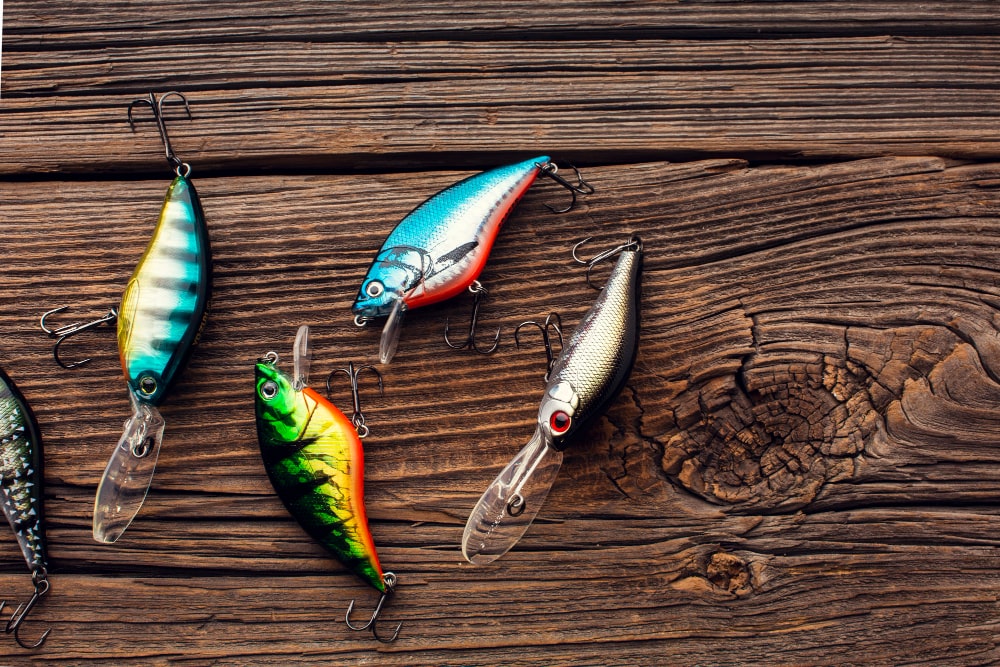
Hard lures — minnows, plugs, and shallow-running stickbaits — have a specific role that soft plastics can't fill. They cast further in a headwind, they run at a precise, consistent depth, and they produce a different kind of action — a tighter, more erratic wobble that bass respond to differently from the steady thump of a paddle tail.
Henry Gilbey's go-to hard lure for rough conditions is a shallow-running minnow in the 12–13cm range. His reasoning: when the wind is in your face and the sea is bouncing, you need a lure that casts well, tracks straight, and stays in the zone without diving too deep. A shallow runner that swims 30–60cm below the surface covers the zone where bass are hunting in most surf and rock situations.
For calmer conditions, a suspending or slow-sinking minnow gives bass more time to inspect and commit. The lure hangs in the water column during the pause, imitating a stunned or dying baitfish — one of the most powerful triggers in bass fishing.

Abu Garcia Fast Cast 28g 1oz Coal
A 28g casting lure in Coal for fresh- and saltwater lure fishing. Choose it when this weight matches the rod and the water you need to cover; vary retrieve speed and pauses to control its presentation.
Surface Lures: The Most Exciting Bass Fishing There Is
Surface lures — walk-the-dog stickbaits and poppers — are the most visually exciting way to fish for bass. When conditions are right — calm or light surf, low light at dawn or dusk, bass actively hunting near the surface — a surface lure produces takes that are impossible to forget. The fish comes up from below, you see the bow wave, then the explosion as it hits.
The conditions for surface lures are specific. They work best in calm or light surf, in low light, when bass are actively pushing baitfish to the surface. In rough conditions or bright midday sun, they're far less effective. But when the conditions are right, Henry Gilbey rates surface lures as some of the most lethal bass presentations available — he specifically mentions the Xorus Patchinko as "the best surface lure ever for bass fishing" and notes that "something about these surface lures seriously does it for bass."

Savage Gear Slap Walker 10cm 10g Blue Flash
A 10cm, 10g surface lure for the topwater approach discussed here. Use controlled rod-tip movements to work it across the surface, and choose a rod capable of casting this lighter lure.
Metal Lures: For Distance and Deep Water
Metal jigs and lures are the distance specialists. When bass are holding at range — over a submerged reef 60 metres out, or in the surf beyond the breaking waves — a metal lure is often the only option that reaches them. They also get down quickly in fast current, which makes them effective for fishing deep gullies and channels where soft plastics would be swept up before reaching the bottom.
Henry Gilbey doesn't go bass fishing without a selection of metal lures, particularly for surf fishing. His go-to metals cast "a country mile" and can be swum shallow or allowed to sink deep depending on the retrieve. The key is to vary the retrieve — a metal worked in short bursts with pauses, rather than wound in steadily, produces far more takes.

Abu Garcia Fast Cast 14g Pink Zebra
The 14g Pink Zebra version of the Fast Cast provides a compact casting-lure option. Match its 14g weight to your rod rating and the depth you intend to fish.
Colour: The Question Everyone Gets Wrong
Lure colour is the most debated topic in bass fishing, and Henry Gilbey's honest take on it is the most useful thing I've read on the subject: "Who the hell really knows? The experts might tell you that you have to fish a specific colour in a specific situation, but my own non-experty thinking is that if you asked a sample of one hundred bass anglers what lure colour they would turn to in different situations, you will end up with a frazzled brain!"
That said, there are patterns that hold across enough sessions to be worth following:
- Clear water, bright conditions: Natural colours — white, silver, pearl, ayu, sardine. The fish can see clearly and a natural-looking lure is less suspicious.
- Coloured or murky water: Brighter colours — chartreuse, pink, orange, fire tiger. The colour needs to be visible through the turbidity.
- Low light (dawn, dusk, overcast): White is Henry Gilbey's favourite in many situations — it creates a strong silhouette against the sky when bass are looking upward. Dark colours (black, dark green) also work well in low light for the same reason.
- Bottom fishing: Gilbey tends toward darker, more natural colours when bumping a lure along the bottom — motor oil, dark green, natural sand eel. His theory is that bass feeding head-down respond better to something that looks like it belongs on the seabed.
Lure Selection by Situation
| Situation | Best Lure Type | Size / Weight | Colour |
|---|---|---|---|
| Rock marks, moderate conditions | Soft plastic paddle tail | 10–13cm, 15–20g head | White, natural, or ayu |
| Surf beach, headwind | Metal lure | 20–40g | Silver, chartreuse, or pink |
| Calm dawn/dusk, surface activity | Surface lure | 12–14cm | Bone, white, or natural |
| Clear water, wary fish | Shallow minnow | 9–12cm, suspending | Natural baitfish, ayu |
| Deep gullies, fast tide | Heavy soft plastic or metal | 13–15cm, 25–40g head | White, chartreuse, or fire tiger |
| Coloured water after rain | Paddle tail soft plastic | 12–15cm, 20g+ head | Chartreuse, orange, or fire tiger |
The Tackle That Delivers the Lure
The best lure in the world won't catch bass if it's not presented correctly, and the rod and line are what make the presentation work. A 9–10ft spinning rod rated 10–40g gives you the range to cast most bass lures accurately and the sensitivity to feel the lure working throughout the retrieve. Load a quality spinning reel with braided line in 20lb and add a 20lb fluorocarbon leader — the braid gives you direct contact with the lure, and the fluoro leader is nearly invisible in clear water and resists the abrasion of rocks and kelp.
Browse our full range of bass fishing lures at Emerald Ripple: soft lures, surface lures, minnows and crankbaits, sea metal jigs, jig heads, and all the lines and terminal tackle you need for a productive session on the Irish coast.