
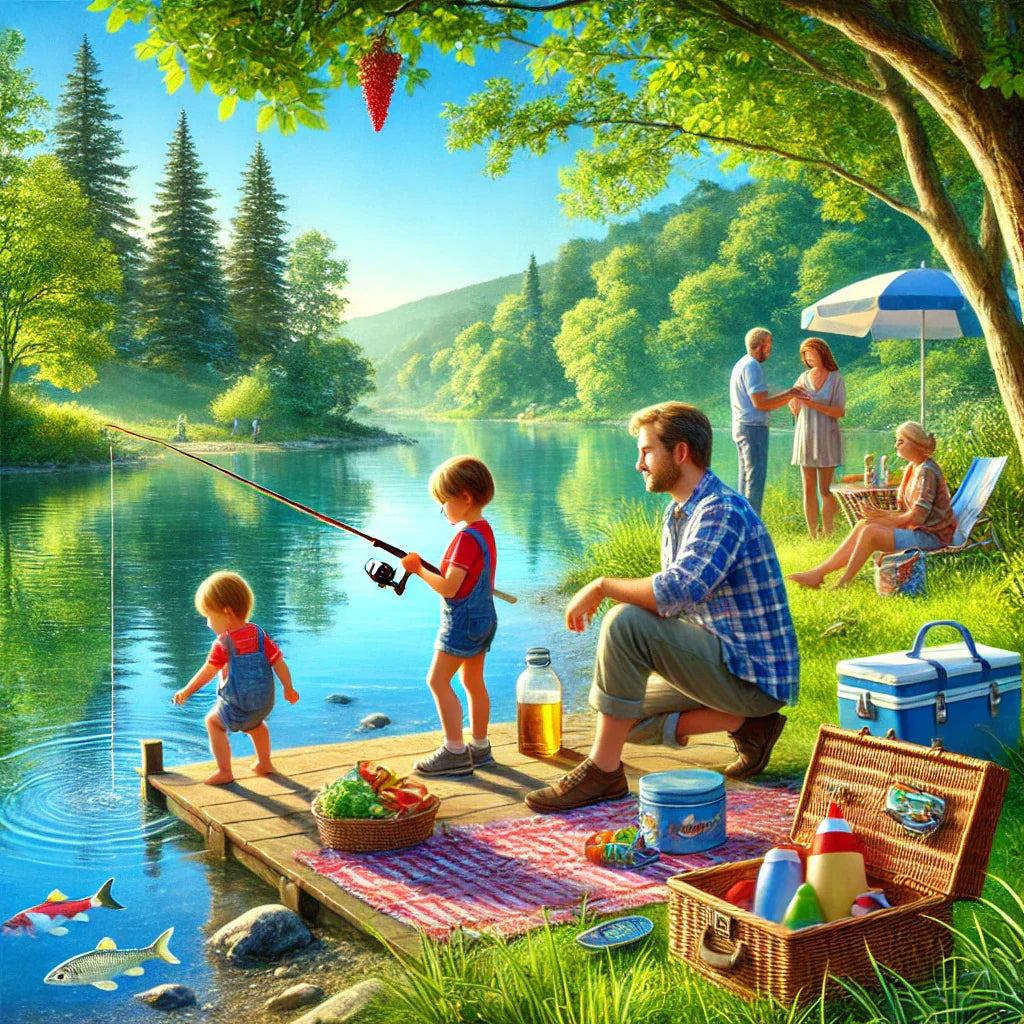
The first time I took my nephew fishing, I made every mistake in the book. I brought too much gear, picked a spot that was too exposed, and spent most of the morning untangling line instead of watching him fish. He caught nothing, got bored by midday, and fell asleep in the car on the way home. I, on the other hand, learned more about fishing with children in those four hours than I had in years of reading about it.
The second trip was different. I kept it simple, picked the right spot, and let him lead. He caught three small perch and talked about it for a week. That's the whole game — get the first experience right and you've made a fishing partner for life.
Pick the Right Spot First
This is the decision that shapes everything else. A good spot for a child is not necessarily a good spot for an adult angler. You want somewhere with a gentle bank, easy water access, and fish that are willing to bite. A small lake or slow-moving river with a clear, flat bank is ideal. Avoid anywhere with a steep drop-off, strong current, or slippery rocks — not just for safety, but because a child who feels uncertain about where they're standing isn't going to enjoy themselves.
Shallow, weedy margins are often the best bet. Roach, rudd, and perch tend to patrol these areas and they're not particularly shy — exactly the kind of fish that will give a child a bite within the first twenty minutes and keep them engaged.
Keep the Gear Simple — But Make It Theirs
There's a temptation to hand a child a scaled-down version of your own setup. Resist it. What works for you is probably too complicated, too heavy, or too frustrating for someone who's never held a rod before.
A telescopic rod is a great starting point — compact, easy to handle, and forgiving of the kind of rough treatment that children inevitably dish out. Pair it with a small spinning reel with a closed or semi-closed spool, which is far less likely to produce the bird's nest tangles that kill enthusiasm fast. A simple waggler float setup with a light monofilament line is all you need technically — it's visual, intuitive, and gives an immediate reaction when a fish takes.
For the rig itself, keep it minimal: a small sliding olivette or split shot above a short leader, and a size 8 or 10 barbless hook. Barbless is important — not just for fish welfare, but because children and hooks occasionally meet in ways you'd rather not deal with at the waterside. A small tackle box with a few spare hooks, some stops and bands, and a couple of floats is plenty.
Let the child be involved in choosing their gear. Even small decisions — which colour float, which lure to try — create ownership and investment in the session.
Run a Quick Waterside Workshop
Before the first cast, spend ten minutes showing the basics. How to hold the rod, how to open and close the bail arm, how to cast without sending the float into the bushes behind you. Keep it practical and short — children learn by doing, not by listening to a lecture about fishing mechanics.
Show them how to bait the hook. Worms are the classic starting bait and they work, but sweetcorn, bread punch, or soft pellet baits are easier for small hands to handle and just as effective for the kind of fish you're targeting. The goal at this stage isn't technique — it's getting the bait in the water and the float doing its job.
Let Them Do Everything
This is the part adults get wrong most often. We take over. The line gets tangled and we fix it. The fish is on and we grab the rod. The float sinks and we shout "strike!" before they've had a chance to react.
Step back. Let them set up the tackle, cast, watch the float, and strike. Let them reel in the fish. If the line tangles, hand them your rod so they can keep fishing while you sort it out — don't make the tangle the event that defines the session. The more they do themselves, the more the experience belongs to them.
If the bites dry up, don't force it. Take a walk along the bank, look for fish in the margins, throw in a handful of groundbait and watch what comes up. Fishing with children is as much about being near the water as it is about catching fish.
Safety: The Non-Negotiables
A life jacket is essential if you're on a boat or fishing anywhere near deep water. This isn't negotiable and it isn't up for discussion — put it on before you get near the water and leave it on. Children move unpredictably and water doesn't forgive mistakes.
Keep them in sight at all times. Even on a calm, shallow bank, a child can slip or wade further than they should in the time it takes you to re-tie a rig. If you're fishing somewhere with any kind of hazard — a steep bank, a fast section of river, a boat jetty — position yourself between the child and the danger.
Make the Experience, Not Just the Catch
Pack snacks. Seriously — a hungry child is a child who wants to go home. Bring enough food and drinks to keep energy levels up through the session, and plan for the fishing to be shorter than you'd ideally like. Two engaged hours beats four restless ones every time.
Celebrate every fish, regardless of size. A small roach caught on a child's own rod, by their own hand, is a bigger deal than any fish you've ever caught yourself. Take a photo, make a fuss, and let them hold it before releasing it back. These are the moments that create lifelong anglers.
Bring a camera or make sure your phone is charged. The fish will be forgotten eventually, but the photo of a grinning seven-year-old holding their first catch won't be.
Building the Habit
The real goal of fishing with children isn't the session itself — it's everything that comes after. A child who has a good first experience will want to come back. They'll start asking questions, looking at fish in rivers, noticing things in the water that they never paid attention to before. That curiosity is worth more than any trophy catch.
As they grow and their interest develops, the gear can grow with them. A proper feeder rod or a light spinning setup with some soft lures opens up new techniques and new species. The progression from float fishing for roach to lure fishing for perch to eventually targeting pike or trout is one of the most natural and enjoyable journeys in the sport.