
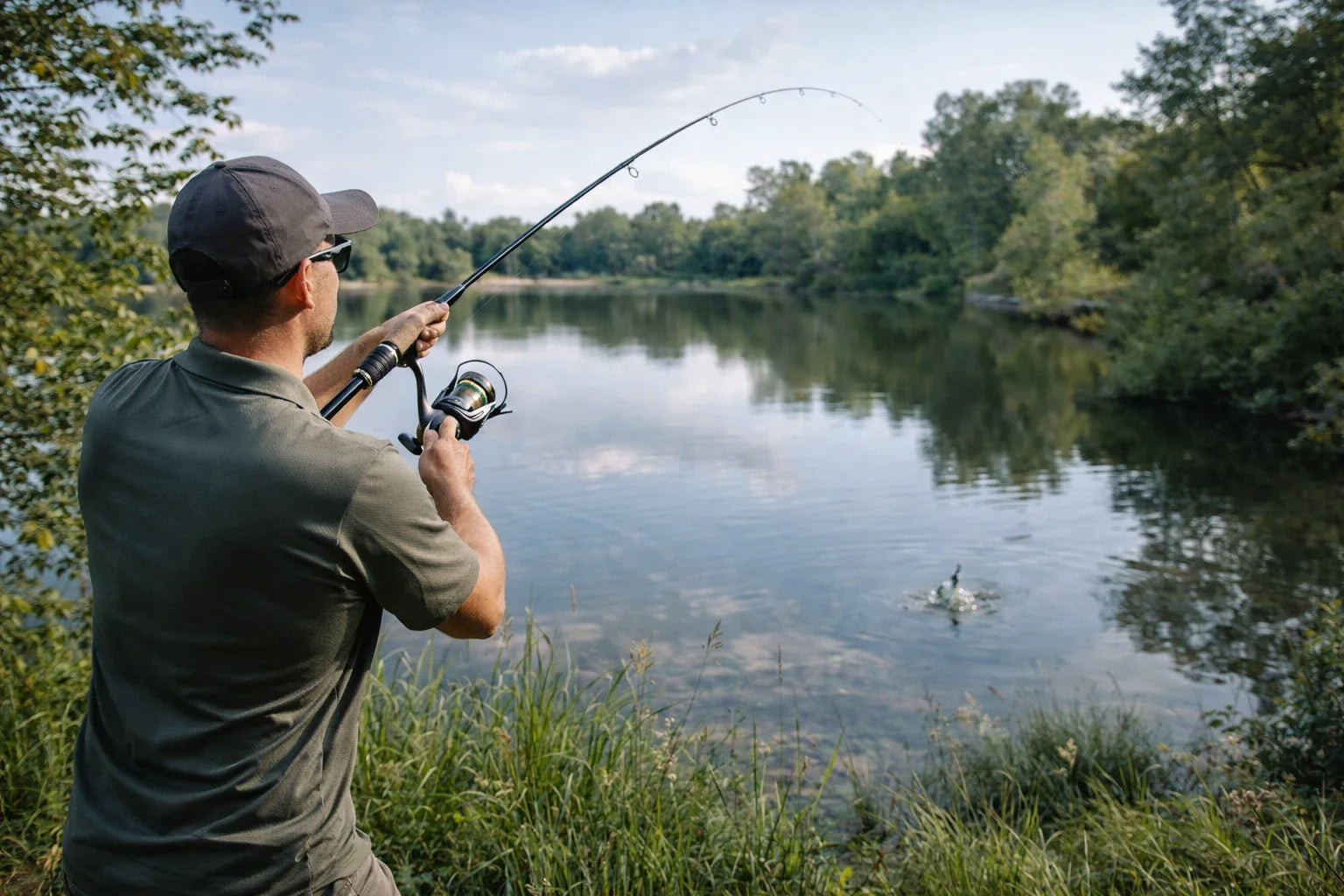
I've had sessions on Irish loughs where pike completely ignored every classic presentation I tried. Steady retrieve — nothing. Jig and drop — nothing. Spinnerbait — nothing. Then I switched to what I now call the hybrid retrieve, and within three casts I had a fish. That session started a process of understanding why this technique works when others don't, and it's become the first thing I reach for when conditions are difficult.
The hybrid retrieve isn't a gimmick. It's a logical combination of the two most effective pike lure techniques — the horizontal steady retrieve and the vertical jig — designed to exploit the strengths of both while eliminating their individual weaknesses. This guide explains the technique in detail, when to use it, and the science behind why it works.
Why Pike Respond to Movement the Way They Do
Before getting into the technique itself, it's worth understanding the predator you're targeting. Steve Ryan, writing for In-Fisherman — one of the most respected freshwater fishing publications in the world — spent years analysing pike behaviour in relation to lure speed and depth. His conclusion: "Success comes from identifying the location and depth at which they're holding and then properly presenting baits to them at the correct speed to trigger strikes."
Pike are ambush predators. They don't chase prey across open water the way a bass or a perch might. They hold in cover, watch a zone, and commit when something enters their strike window at the right speed and depth. The challenge is that "right speed" changes constantly — with water temperature, time of year, time of day, and the mood of individual fish. A lure that triggers strikes at 9am may be completely ignored at 11am on the same mark.
This is the fundamental problem with single-retrieve techniques. A steady retrieve works brilliantly when pike are active and willing to chase. A jig-and-drop works when they're holding tight to structure and won't move far. But neither works consistently across all conditions. The hybrid retrieve solves this by combining both within a single presentation.
The Hybrid Retrieve: Step by Step
The retrieve combines a horizontal steady phase with a vertical jig phase in a repeating cycle. Each phase serves a specific purpose, and the transition between them is where most takes occur.
Repeat this cycle throughout the retrieve. The rhythm becomes natural quickly — steady, pause, lift, drop, steady, pause, lift, drop. The key is to vary the pause length based on conditions: longer pauses in cold water or when fish are inactive, shorter pauses in warm water with active fish.
Why the Transition Moment Triggers Takes
The most important insight from Steve Ryan's research on pike speed and depth preferences is this: "Pike often approach deadsticked baits in slow motion. They seem to study a motionless bait. At times, a slightly more erratic action or one big hop triggers them into biting."
This is exactly what the hybrid retrieve exploits. During the steady phase, a pike may follow the lure without committing — tracking it, assessing it, but not yet triggered. The pause stops the lure and changes its behaviour from "fleeing prey" to "vulnerable prey." The jig lift then creates the "one big hop" that Ryan describes — the sudden movement after a period of vulnerability. This combination of vulnerability followed by sudden escape is the most powerful trigger sequence in pike fishing.
Lure Selection for the Hybrid Retrieve
Not all lures work equally well with this technique. The hybrid retrieve requires a lure that performs in both horizontal and vertical planes — it needs to swim cleanly on the steady phase and flutter attractively on the drop. The best options are:
Large Soft Plastics (15–25cm)
Paddle tail shads and large swimbaits are the ideal hybrid retrieve lures. Their paddle tail produces action on the steady phase, and the soft body flutters naturally on the drop. The weight of the jig head determines how fast the lure sinks during the pause — a heavier head gives a faster, more dramatic drop; a lighter head gives a slower, more seductive flutter.

Berkley Prerigged Giant Ripple 20cm — Perch
€8.32
A large, pre-rigged soft plastic in a natural perch pattern — one of the most effective pike trigger colours on Irish loughs. The 20cm size matches the baitfish profile that large pike are targeting, and the paddle tail produces strong vibration on the steady phase while fluttering naturally on the drop.

Berkley Prerigged Giant Ripple 20cm — Fire Tiger
€8.32
The fire tiger pattern is the go-to colour for coloured water and overcast conditions. When the perch pattern isn't triggering takes, fire tiger's high-contrast green and orange often gets a response from pike that have become wary of natural colours.
Jerkbaits
Jerkbaits are excellent for the hybrid retrieve because they're designed to be worked with rod movements rather than reel speed. The steady phase keeps them swimming; the jig lift creates the erratic darting action that jerkbaits are designed to produce. Suspending or slow-sinking jerkbaits are particularly effective — they hang in the water column during the pause, giving pike time to commit before the next lift.

Berkley Cutter Juke Shallow 10cm — Pike
€9.51
A shallow-running jerkbait in a natural pike pattern. Works brilliantly with the hybrid retrieve — the steady phase keeps it swimming at a consistent depth, and the jig lift creates the erratic darting action that triggers following pike. The pike pattern is particularly effective in clear water where a realistic profile matters.
Spinnerbaits
Spinnerbaits are underused for the hybrid retrieve but highly effective. The blade produces vibration and flash on the steady phase, and the skirt flutters attractively on the drop. Steve Ryan's research found that spinnerbaits are particularly effective for pike on weedflats in summer — the rapid pace can make a weedbed come to life in a way that other lures can't achieve.

Abu Garcia Beast Insta-Spinnerbait
€5.22
A quality spinnerbait from Abu Garcia's Beast predator range. The blade produces strong vibration and flash on the steady phase, while the skirt creates a natural, pulsing action on the drop. An excellent choice for the hybrid retrieve on Irish loughs and rivers.
Adapting the Hybrid Retrieve to Conditions
| Condition | Steady Phase | Pause Length | Jig Lift | Best Lure |
|---|---|---|---|---|
| Cold water (<10°C) | Very slow, 2–3 turns | 3–5 seconds | Gentle, 15–20cm | Large soft plastic |
| Mild water (10–15°C) | Moderate, 3–5 turns | 2–3 seconds | Medium, 25–35cm | Jerkbait or soft plastic |
| Warm water (>15°C) | Faster, 5–7 turns | 1–2 seconds | Sharp, 35–40cm | Spinnerbait or swimbait |
| Coloured water | Moderate, 3–5 turns | 2–3 seconds | Medium, 25–35cm | Bright/fire tiger soft plastic |
| Clear water | Slow, 2–4 turns | 3–4 seconds | Gentle, 20–30cm | Natural pattern jerkbait |
| Post-cold front | Very slow, 2 turns | 4–6 seconds | Very gentle, 10–15cm | Suspending jerkbait |
Stingers: Don't Miss Short-Striking Fish
One of the most common frustrations with large pike lures is short strikes — the fish takes the lure from behind and misses the hook. A stinger hook attached to the rear of the lure solves this problem. On the hybrid retrieve, where the drop phase often produces takes from below and behind, a stinger converts many of these short strikes into landed fish.

Abu Garcia Beast Stinger
€11.00
A quality stinger hook from Abu Garcia's Beast predator range. Attaches to the rear of large soft plastics and swimbaits to catch short-striking pike. Essential for the hybrid retrieve, where the drop phase often produces takes from behind the lure.
The Line Setup
For the hybrid retrieve, braided line is essential. The technique relies on feeling the lure throughout the retrieve — particularly during the pause and drop phases, when you need to detect takes that may be very subtle. Braid's lack of stretch gives you direct contact with the lure at all times. A fluorocarbon leader of 20–30lb is non-negotiable for pike — their teeth will cut through braid instantly.
Browse our full range of pike lures at Emerald Ripple: soft lures, jerkbaits, swimbaits, spinnerbaits, stingers, braided line, and spinning rods for predator fishing.